This article on Epainassist.com has been reviewed by a aesculapian master , as well as checked for fact , to see to it the reader the best possible accuracy .
We travel along a strict editorial policy and we have a zero - tolerance insurance policy regarding any level of plagiarisation . Our articles are resourced from reputable on-line pageboy . This article may contain scientific references . The numbers in the parenthesis ( 1 , 2 , 3 ) are clickable links to peer - go over scientific papers .
The feedback link “ Was this Article Helpful ” on this page can be used to describe content that is not accurate , up - to - date or confutable in any style .
This article does not provide medical advice .
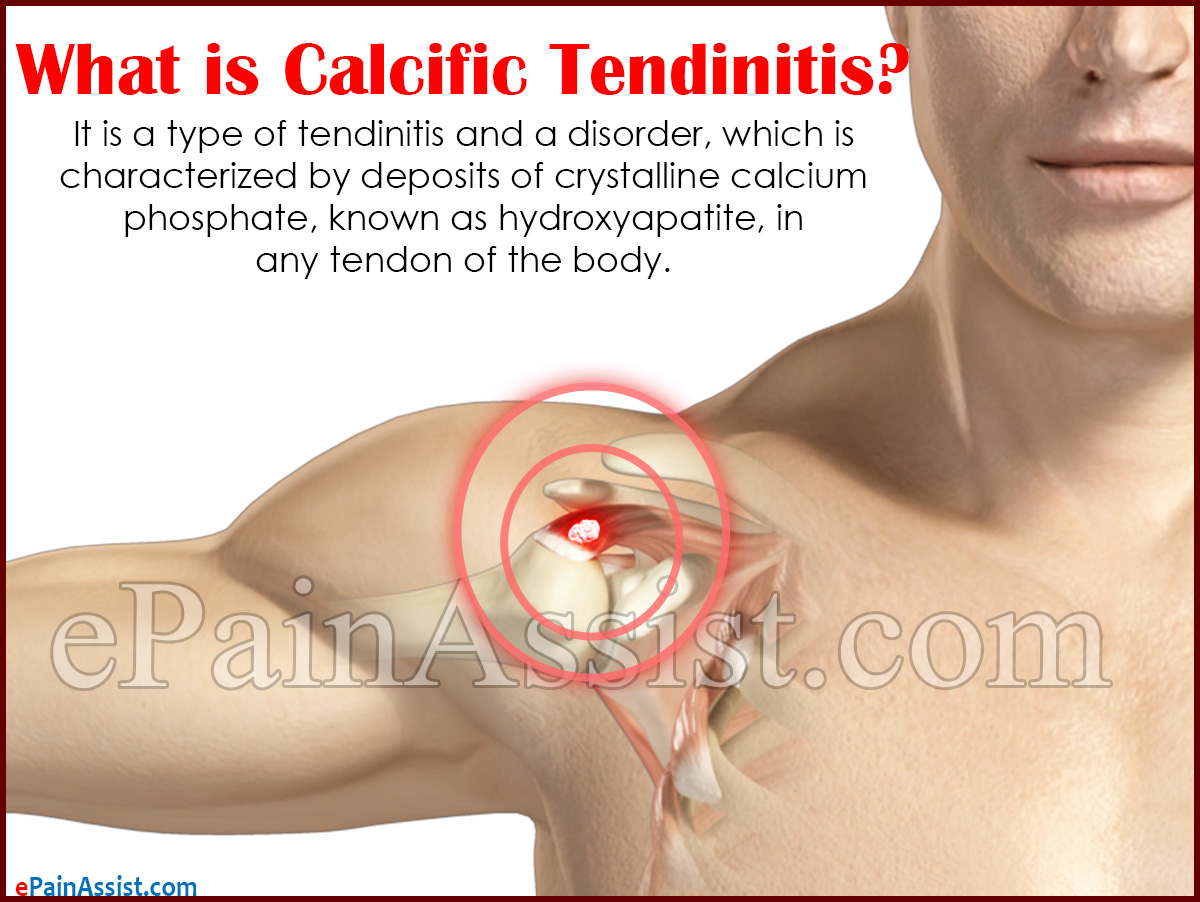
What is Calcific Tendinitis?
Calcific tendinitis ( calcific/ calcified/ calcifying / chalky tendinitis/ tendinopathy/ tendonitis/ , hydroxyapatite deposition disease ( HADD ) , tendinosis calcarea/ calcific periarthritis ) , is a type of tendinitis and a disorder , which is characterize by deposits of crystalline Ca phosphate , know as hydroxyapatite , in any tendon of the body.1However , the most commonly affected tendon is the rotator cuff tendon present in the shoulder . This status is associated with adhesive capsulitis ( quick-frozen shoulder ) and also may lead to it . The main symptom of calcific tendinitis comprise of pain in the neck and inflammation .
Treatment of Calcific Tendinitis consists of restriction of dietary Ca , steroid injection , annoyance killers , extracorporeal shock wave therapy , physical therapy and surgical operation .
Signs & Symptoms of Calcific Tendinitis
As mentioned above , the main symptoms of calcific tendinitis are pain and inflammation in the region of the affected tendon , particularly in the shoulder .
Causes of Calcific Tendinitis
According to enquiry , there are 3 independent theories , which can explicate the mechanisms behind the calcification of the tendons .
As of now not a exclusive theory is found to be satisfactory , which can excuse all the cases , hence calcific tendinitis is soon retrieve to be multifactorial .
Diagnosis of Calcific Tendinitis
go - ray shows the calcific deposit as mirky country or discrete lumps.2The cloudy appearance go on if the deposits are in the process of reabsorption , and this is the stage when the patient finger the maximal pain in the neck . In the resting stage of the sedimentation , they appear crystalline . In the reabsorptive microscope stage , they are like toothpaste in appearance . However , there is a poor correlation between the appearance of a calcific deposit on plain x - ray and the consistency feel upon needling . Ultrasound is also helpful in visualizing the calcific deposits which closely correlates with the disease stage .
Treatment for Calcific Tendinitis
References :
