This article on Epainassist.com has been review by a aesculapian professional , as well as check out for facts , to assure the readers the best possible accuracy .
We follow a rigid editorial insurance policy and we have a zero - margin policy regarding any level of plagiarization . Our articles are resourced from reputable on-line pages . This article may contains scientific reference . The numbers in the parentheses ( 1 , 2 , 3 ) are clickable links to peer - retrospect scientific paper .
The feedback link “ Was this Article Helpful ” on this page can be used to report depicted object that is not accurate , up - to - date or questionable in any fashion .
This clause does not ply medical advice .
What is Polydactyly?
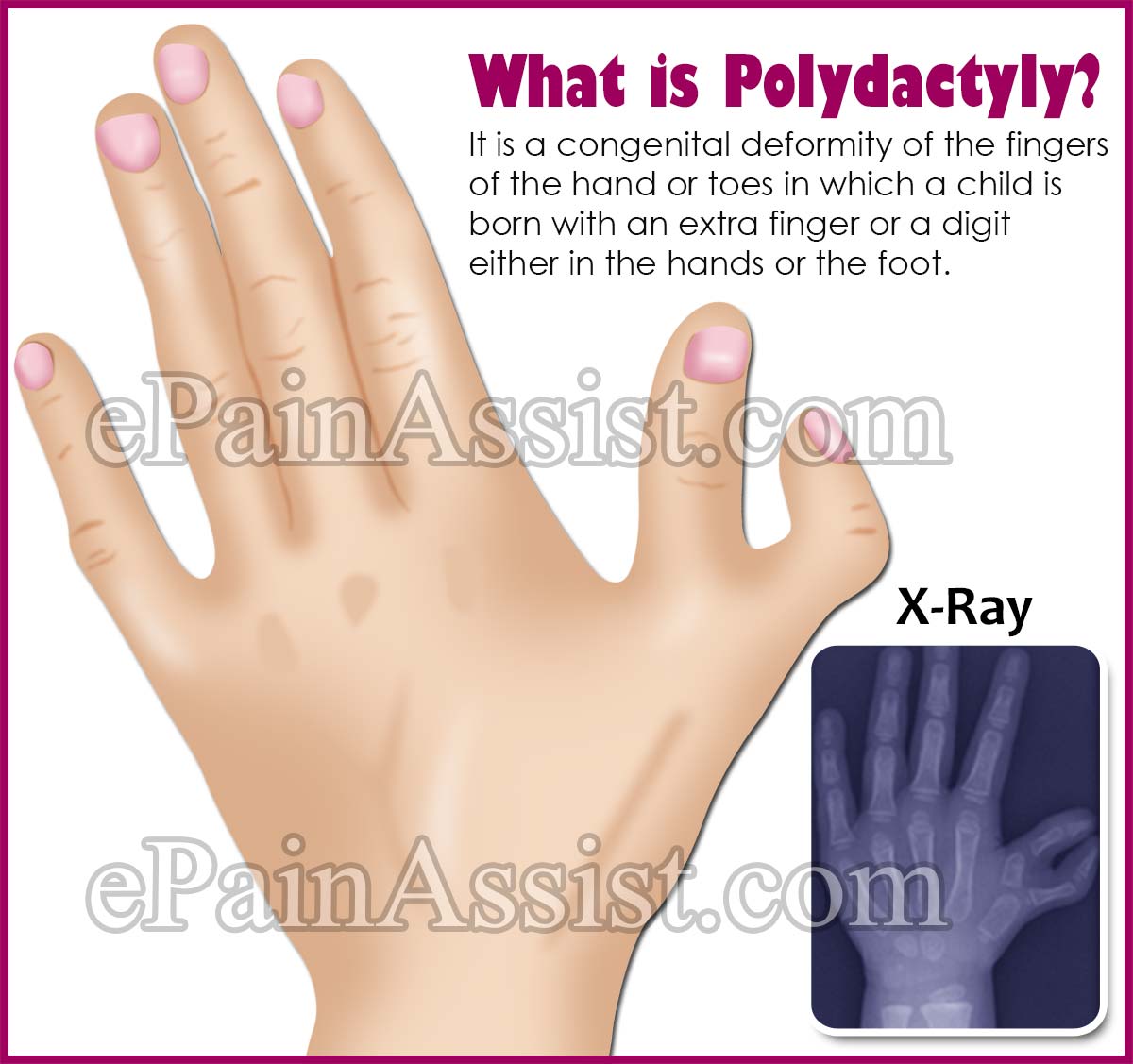
Polydactyly is a inborn disfigurement of the fingers of the script or toes in which a child is expect with an extra finger or a digit either in the hands or the foot.1There may just be one or more surplus finger present in the hand or substructure . When speak of the hands Polydactyly or the additional finger is most commonly present adjacent to the small finger . It may also be present along with the thumb . Rarely , it is present in the middle of the hand . In the pes , it is normally present with the thumb . The extra finger’s breadth present in Polydactyly is normally underdeveloped and the severity of the condition count on what this redundant finger or finger are made up of . The most plebeian and promiscuous one to treat is the finger which is made up of just skin and flaps of tissue paper . In the more moderate form , the supernumerary fingerbreadth is made up of peel , subdued tissue paper as well as bone but there are no joints present in that finger’s breadth . These types of finger in polydactyly necessitate more complex shape of discourse . In the severest eccentric , there is skin , tissue paper , bone as well as joint present in the extra finger and this poses the maximal challenge for physicians to remove and treat . Polydactyly is quite common and occurs in around 10 - 15 % of babies conduct . In bulk of the cases , only one hand or substructure is affected by this stipulation .
What is the Cause of Polydactyly?
The establishment of hand normally take up at the 2d or third week of pregnancy . By the 7th week of pregnancy , the fingers start to make . Polydactyly normally occur as a result of any irregularity in the mental process of development of the hands and fingers and as a result a single finger split into two parts ensue in geological formation of an extra digit . asunder from this , there is no other cause identified for Polydactyly as of now . This condition is most unwashed in African American child .
What are the Symptoms of Polydactyly?
Polydactyly is a visible deformity that is present in a child at giving birth . If it occurs in the bearing of some other genetic consideration then the baby may experience symptoms of that condition . Polydactyly in itself does not cause any pain in the neck or discomfort for the tike asunder from decorative displeasure for the parents .
How is Polydactyly Diagnosed?
Prenatally meaning that before the child is born , Polydactyly can be seen on ultrasonography and presents as a visible deformity at birth.2The handling course will be formulated by the physician after taking a look at the internal social system of the extra finger which will be done by performing radiological studies in the form of x - rays or MRI scan . Once the internal social system of the extra fingerbreadth is take and it is known whether that finger is just made up of pelt and tissue paper and whether there are bone or spliff in the fingerbreadth a handling program will be formulated .
How is Polydactyly Treated?
OR is the mode of treatment for treating Polydactyly.3If the extra digit is just made up of tissue and hide then it can be easily excised . The procedure is done when the nipper is about two age of age . This subroutine is comparatively minor and does not ensue in any particular complications . If the extra finger is at the thumb then the situation becomes a mo more complex as the subprogram may negatively affect the operation of the pollex and its shape and position . The procedure is a turn complicated as the surgeon need to make certain that while transfer the extra quarter round the tissues of the normal ovolo are not wound . The surgeon in some casing may also have to redo the quarter round into proper position and flesh . Despite this , the normal ovolo may still look deface to an extent . The most complex subroutine is removing the extra fingerbreadth in the centre of attention of the hand as it demand restructuring and reconstruction of the script cause sure that none of the joints , tissue , or tendons is injured during the function . In such cases , unremarkably more than one operation is required . Once the extra finger’s breadth is successfully removed then further disciplinary surgery can be done to ameliorate the enhancive appearance of the affected realm .
What is the Prognosis of Polydactyly?
In majority of the cases , the babe regains full function and almost a normal looking appearance of the hand or feet and there are minimal complications with surgical procedure done for Polydactyly . Once fully recover from operation , the child may need to be observed for a few months to tally on the healing outgrowth , the function of the affected region , look at the ornamental appearance of the area , and to see if further operative procedures are warranted in case if desires result is not attained after surgical procedure for Polydactyly .
acknowledgment :
