This article on Epainassist.com has been reviewed by a medical professional , as well as checked for fact , to check the readers the best potential accuracy .
We stick to a strict editorial insurance policy and we have a zero - tolerance policy regarding any level of plagiarism . Our clause are resourced from reputable online page . This clause may contains scientific references . The numbers in the parentheses ( 1 , 2 , 3 ) are clickable tie to peer - reviewed scientific papers .
The feedback link “ Was this clause Helpful ” on this pageboy can be used to report content that is not precise , up - to - date or questionable in any manner .
This clause does not provide aesculapian advice .
What is Symphalangism?
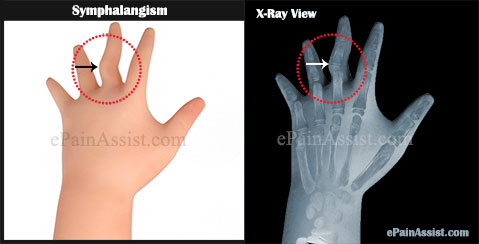
Symphalangism is inborn disorder in which a baby is born with stiff digits as a final result of Autofusion of the joints of the finger or toe induce meaning functional deadening for the child as the tike grows.1This term is also cosmetically displease for the eye . The most common touched joint in Symphalangism is the Proximal Interphalangeal Joint or the PIP joint of the digit . Symphalangism can both be inherit or non - transmissible . If this shape is hereditary then it is an autosomal dominant trait . Symphalangism usually occurs in people suffering from other inborn disorder like Poland Syndrome or Apert Syndrome.1This term occurs due to some abnormality in the process in the developing stages of the manpower and feet of the infant due to which the phalanges do not separate from each other resulting in Autofusion of the articulation .
What is the Cause of Symphalangism?
There is no literal suit of Symphalangism identified but it ordinarily occurs due to some abnormalcy in the process of ontogenesis of the infant ’s fingers of the men or groundwork where the phalanges fail to divide from each other . It is believe to be both inherited as well as non - transmitted condition . There have been some cases in which Symphalangism has run in the category and is believed to be an autosomal rife trait . This condition is also believe to occur in the presence of certain other congenital syndrome like Apert Syndrome or Poland Syndrome .
Classification or Types of Symphalangism
Symphalangism has been classified in various family based on the radiologic differences seen.1These categorisation are :
Grade I : This is also called as Fibrous Symphalangism and takes place when there is just a hint of joint blank narrowing seen in the affected joint .
Grade II : This is called as Cartilaginous Symphalangism . In this type , there is minimal joint space observe on radiologic views .
Grade III : This is called as Bony Symphalangism and it appears when there is clean bony ankylosis seeable on radiologic films
What is the Clinical Presentation of Symphalangism?
The Hellenic demonstration of Symphalangism is extreme stiffness of the joints of the fingers with inability to comfortably move the finger . There is also absence of skin creases of the affected finger . It is visible deformity and can be easily seeable at the sentence of birth . ordinarily , there will be more than one finger that is affected in Symphalangism and usually the PIP juncture is affected resulting in the finger being fix in telephone extension . There will also be narrowing of the flabby tissues in the affected digit . The child is not able-bodied to make a complete fist and has trouble in pick or grasping object .
How is Symphalangism Diagnosed?
Radiologic studies in the form of x - irradiation can identify the grade of the condition.2This condition can not be radiologically substantiate directly after nascency because of lack of ossification of the phalanges around the touched joint . As the child grows when the finger cymbals start to ossify complete fusion of the joints take place which can be seen radiologically .
How is Symphalangism Treated?
Treatment for Symphalangism is based on the form of the condition and how problematical is it for the child to go with the affected manus . Digits which are limit in denotation can be treat by doing a surgical procedure name as flexion osteotomy . In slip of Symphalangism where the unnatural fingers may be short than normal then finger protraction can also be done . study speculate that if a surgical outlet of the coalition is done when the condition is in the fibrous state then some motion of the finger can be attained . For such , the procedure should be done as before long as possible but in majority of cases gaining normal movement of the fingerbreadth is quite difficult in Symphalangism .
References :
